Try a Chocolate Mousse Made With Water
Water usually gets blamed when melted chocolate turns grainy. In this mousse, a measured amount of water goes in from the start. The mixture is melted until smooth, then whisked while it cools over ice.
It is a useful way to taste a finished bar on its own terms. There is no cream or egg in the basic recipe to soften its flavour, and the result is richer and closer to a thick pudding than a light, airy mousse. With water as the only other ingredient, a water filter for home can supply the measured amount at the kitchen tap.
Choose the chocolate before you measure the water
Start with 100 g of dark chocolate at roughly 70 percent cocoa and 80 ml of water. That makes two or three small servings. Use chocolate you enjoy eating, since its flavour carries the whole dessert. A sweeter bar changes the taste, and milk or white chocolate may not thicken in the same way as dark chocolate.
Chop the chocolate into small pieces so it melts evenly. Set a smaller bowl, preferably metal, inside a larger bowl of ice and water. Have the serving dishes ready before heating the chocolate. Once the mousse thickens, there is little time to portion it while it is still smooth.
Melt, cool and watch the whisk
Put the chocolate and water in a small saucepan over low heat. Stir until the chocolate has dissolved into a smooth liquid. Do not let it boil. Pour it into the bowl over the ice bath and whisk straight away.
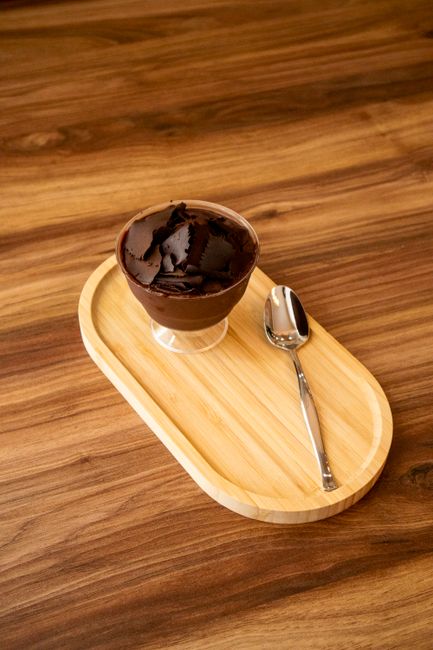
At first it looks like a thin chocolate mixture. Keep whisking until it thickens and holds ribbons from the whisk, about the texture of a thick pudding. Stop there and spoon it into the dishes. Whisking past that point can make it stiff and grainy.
If the texture misses the mark
A mixture that stays runny may need more chocolate. Melt it again gently, add a little more chocolate and repeat the cooling and whisking. If it becomes too thick or grainy, remelt it with a little more water, then whisk it over ice again. Treat the first attempt as a check on the ratio and the point where you stopped whisking.
Serve it soon after making it for the softer texture. Chilling makes it firmer. If you do put it in the fridge, let it stand for a few minutes before serving and check whether the texture suits you.